

- Aim for a credit score of 620 and keep collections and judgments under control or set up payment plans.
- Typically, wait two years after a foreclosure or bankruptcy to qualify for a VA loan.
- Income must be stable and sufficient to cover the mortgage and living costs.
Your credit plays a huge role in the VA loan process. Fortunately, for Veterans and active-duty service members, VA loans offer more lenient credit requirements compared to conventional loan programs.
Wondering what lenders will expect from a VA loan applicant? Take a look at these four questions that will definitely come up during the credit evaluation.
1. Does Your Credit Score Meet Lender Requirements?
While requirements vary, a minimum credit score of 620 is common among most VA lenders. There are two important factors to consider here:
- The credit score you see is often different from the credit score a lender sees. VA lenders use a unique scoring formula, weighing your score for mortgage-related factors. This is known as your mortgage credit score.
- Lenders usually check credit scores from at least two different agencies, and those scores can differ. When two scores are used, lenders typically use the lower of the two scores. If three scores are available, the middle score is used.
For example, a borrower sees a consumer credit score of 665 and assumes everything is in order. Only upon applying for a VA loan does the borrower learn that the lender views their score as 615.
The best way to know your eligibility is to request prequalification or preapproval. A Veterans United VA loan expert can also help you determine if your credit scores are satisfactory or need improvement. Your credit score also plays a role in the VA loan rates you're offered, so it's worth checking where you stand before applying.
2. Do You Have Any Collections, Charge-Offs or Judgments?
Lenders want to ensure their borrowers will meet their financial obligations and make payments on time.
The VA allows lenders flexibility in how they handle a Veteran with derogatory debt, such as collections, charge-offs, judgments or tax liens. Most VA lenders set limits on the amount of derogatory debt a Veteran can have on their credit report. Debt exceeding that limit will be carefully analyzed by underwriters and could trigger a denial.
Also, keep in mind that if you’re delinquent or in default on any federal debt, your VA loan application will likely be denied.
However, not all federal debt will necessarily lead to a VA loan denial. For example, Veterans with student loans can qualify for a VA loan, as long as the account is current and in good standing.
The best way to handle collections or judgments? Set up a manageable payment plan. VA lenders would much rather see an applicant managing their debt than ignoring their debt.
VA guidelines don’t require non-medical collections to be paid off, but they’re still factored into your overall credit profile, debt-to-income ratio and residual income. Medical collections that haven’t become a judgment or lien typically don’t need to be paid and generally won’t affect credit acceptability. However, judgments and tax liens usually must be resolved or placed on a payment plan before loan approval.

3. Is There a Foreclosure, Bankruptcy or Short Sale in Your Past?
If you’ve recently experienced a foreclosure, short sale or bankruptcy, a VA lender will typically require you to wait the following periods before considering your VA loan application:
- Chapter 7 bankruptcy: Typically two years from the discharge date
- Chapter 13 bankruptcy: Typically 12 months from the filing date
- Foreclosure/short sale: Typically two years from the completion date
The VA loan waiting period is usually much shorter than other loan options. But don’t forget you’ll have to do more than endure the waiting period. You’ll also need to show excellent credit habits since the bankruptcy or foreclosure, and maintain a stable income. Regardless, a VA loan after bankruptcy is still possible.
Borrowers in a Chapter 13 may be approved during repayment with trustee approval and at least a 12-month satisfactory payment history. Strong post-event credit behavior is critical if you experience a bankruptcy, foreclosure or short sale.
4. Is Your Income and Employment History Sufficient and Stable?
If you have an inconsistent employment record or a widely varied income, qualifying for a VA loan may be more difficult. VA lenders want to be confident that you can pay your mortgage on time. Gaps in employment or unstable income could easily give your lender the impression you’re not financially ready for a VA loan.
Your income for a VA loan must be enough to cover the basic costs of living plus a mortgage. And when it comes to employment, the longer you’ve been employed, the better.
VA loans place less emphasis on DTI ratios than conventional loans and focus more on whether you have enough residual income after your monthly expenses.
Retired and disabled Veterans are exempt from the employment requirements, but still must show enough household income, whether through a spouse’s income, disability earnings or pensions, to manage a mortgage.
How to Strengthen Your VA Loan Application
If your income or employment history isn’t perfect, don’t worry. There are steps you can take to improve your VA loan application to show lenders that you’re a reliable borrower.
- Gather two years of W-2s or tax returns
- Keep documentation for any employment gaps
- Maintain a low debt-to-income (DTI) ratio
- Avoid major job changes during the loan process
- Do not open new credit accounts
Veterans United Can Help Improve Your Credit
Need help improving your credit before applying for a VA loan? Work with one of Veterans United’s credit consultants to receive personalized guidance, helping you strengthen your financial profile and move closer to homeownership.
Speak with a Veterans United VA loan expert at 855-870-8845 or get started online today.
How We Maintain Content Accuracy
Our mortgage experts continuously track industry trends, regulatory changes, and market conditions to keep our information accurate and relevant. We update our articles whenever new insights or updates become available to help you make informed homebuying and selling decisions.
Current Version
Mar 19, 2026
Written ByCarla Blair-Gamblian
Reviewed ByDon Wilson
Updated content for readability and more context. Article reviewed and fact checked by underwriter Don Wilson.

Related Posts
-
 5 Most Common VA Loan Myths BustedVA loan myths confuse and deter many VA loan borrowers. Here we debunk 5 of the most common VA loan myths so that you can borrow with confidence.
 -
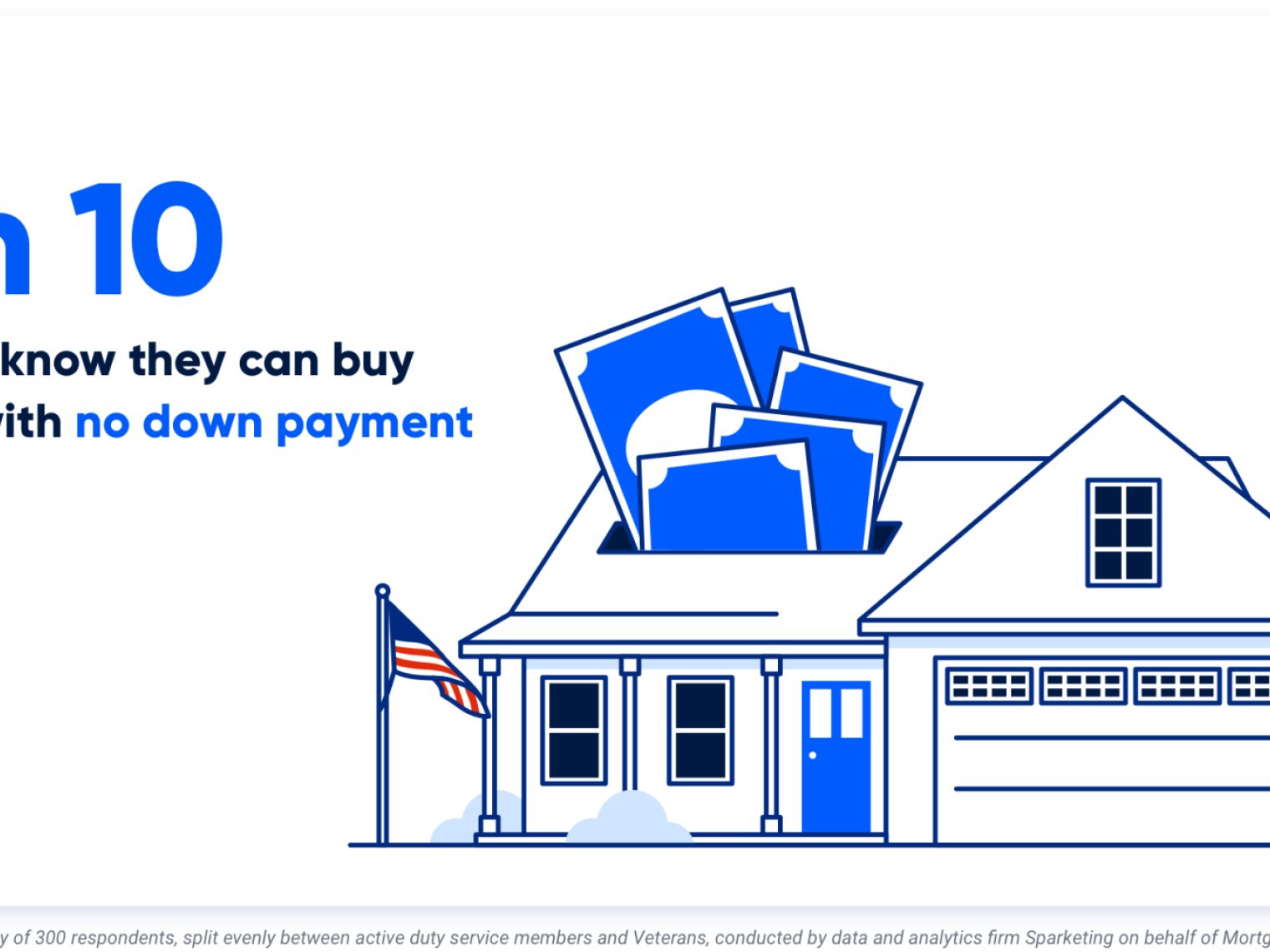 VA Loan Down Payment RequirementsVA loans have no down payment requirements as long as the Veteran has full entitlement, but only 3-in-10 Veterans know they can buy a home loan with zero down payment. Here’s what Veterans need to know about VA loan down payment requirements.


